

Child Development
The 7 Areas of Learning in the EYFS: What They Look Like at Destiny Haven
Written by Susana, Owner & Manager at Destiny Haven Nursery
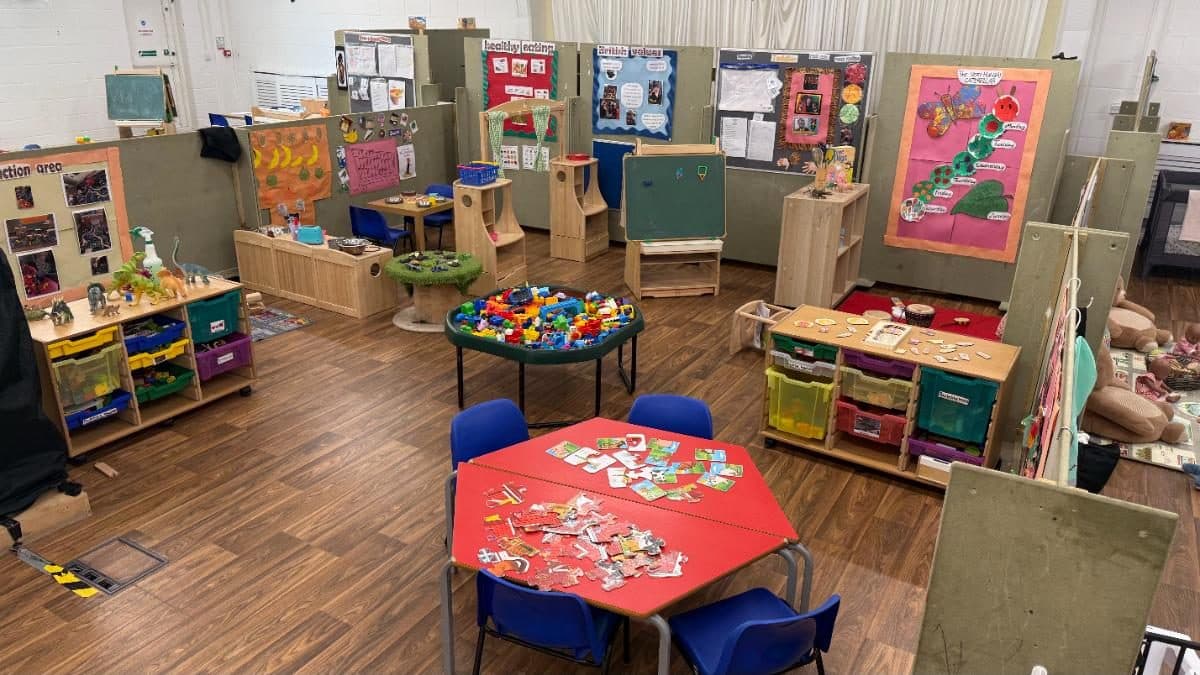
Parents often ask us what their child actually gets up to during the day and how it connects to learning. It is a fair question and one I genuinely enjoy answering, because the answer is usually more thoughtful than people expect.
The EYFS statutory framework sets out seven areas of learning and development that all registered early years settings in England must follow. These are split into three prime areas and four specific areas, and together they shape everything we plan at Destiny Haven across our Noel Park and Tottenham sites.
It is worth noting that while the DfE published updated EYFS statutory frameworks in July 2026, coming into effect this September, the areas of learning, educational programmes and Early Learning Goals themselves have not changed. The 2026 update focuses on safeguarding, welfare and screen use. So everything described below reflects the same curriculum framework we have been working within since we opened in 2017.
The Three Prime Areas
These are the foundations. Without them, the specific areas cannot take root, which is why we give them so much attention in the youngest rooms.
1. Communication and Language
This is the one that underpins everything else. The quality and number of conversations children have with adults and peers across the day makes an enormous difference to their development. At Destiny Haven we use the Wellcomm toolkit, a recognised speech and language screening tool that uses a traffic-light system to help us quickly identify each child's level of communication and follow a clear pathway if any support is needed. In practice this means we are attuned to language at every moment, not just during planned activities. Snack time, nappy changes, tidy-up time, they are all conversations.
If you want practical ideas to carry this on at home, our guide on supporting speech and language development at home is a good place to start.
2. Personal, Social and Emotional Development
This is probably the area parents worry most about when their child first starts with us. Can they manage without me? Will they make friends? We see children grow so much here. Learning to wait for a turn, to name a feeling, to comfort a friend who is upset: these are real skills that take time and consistent support. Our key person approach and gentle settling-in programme are both built around this area specifically.
3. Physical Development
This covers both gross motor skills, running, climbing, balancing, and fine motor skills, threading, mark-making, using tools. We take physical development seriously at both our North London sites, and our guide on why outdoor play matters more than you might think goes into more detail about how movement connects to everything else.
The Four Specific Areas
These build on the prime areas and become more prominent as children move through nursery towards school readiness.
4. Literacy
Literacy in the early years is not about formal reading lessons. It is about stories, songs, rhymes, noticing print in the environment, and building a love of books long before children can decode words. We include phonics in our curriculum, introduced playfully and at the right time for each child. Our guide on reading with your child has ideas you can use together at home.
5. Mathematics
I often tell parents that maths happens constantly without anyone announcing it. Sorting toys by colour, counting steps on the way to the garden, working out whether there are enough cups for everyone at snack time. We build number sense, shape awareness and early pattern recognition into everyday routines rather than sitting children down with worksheets.
6. Understanding the World
This is one of my favourite areas to observe because you can see children's genuine curiosity at work. It covers science, technology, the natural world, and learning about communities and cultures different from their own. Families in Haringey bring such a rich mix of backgrounds and languages into our settings, and that diversity genuinely enriches this area of learning every single day. Planting seeds, exploring ice, looking at photographs of each other's families: it all belongs here.
7. Expressive Arts and Design
Creativity matters deeply to us. Art, music, role play, dance, construction: these are not fillers between the serious activities. They are how children process their experiences, build imagination, and begin to communicate ideas that words cannot yet carry. We invest in open-ended materials and give children time to explore without a fixed outcome in mind.
Why the areas work together
One thing worth understanding is that these seven areas are not taught in separate slots. A child building a den in the garden is using physical development, language, mathematics, creativity and personal skills all at once. That is the nature of play-based learning, and it is why we think about the whole child rather than ticking areas off a list. Our guide on why play is the most important work your child does explores this more if you would like to read further.
At Destiny Haven Nursery we accept both 15 and 30 hours government-funded places. If you are unsure what you might be eligible for, our fees and funding page is a good starting point.
If you would like to see how all of this comes to life in our rooms, the best thing to do is book a show-around. Come and see the environment, meet the team, and ask us anything. We would love to welcome you to either of our Haringey sites.
Come and see us for yourself
Book a relaxed tour of Destiny Haven Nursery and meet our team.
Book a tourOther guides you might like
Child Development
What Mixed-Age Learning Really Looks Like (And Why It Works)
Mixed-age groupings are something we think about carefully at Destiny Haven Nursery. Here's what we actually see happening when children of different ages learn alongside one another.
Child Development
Why Play Is the Most Serious Thing We Do at Nursery
Play is not a break from learning. It is how children learn. Here is what we see every day at Destiny Haven Nursery, and why it matters more than most people realise.
Child Development
Why Play Is the Most Important Work Your Child Does
Play is far more than fun. It is how young children learn to think, communicate, relate to others, and make sense of the world around them. Here is what we see every day at Destiny Haven Nursery.
Frequently asked questions
Are the 7 EYFS areas of learning changing in 2026?
No. The DfE published an updated EYFS framework in July 2026, effective from September 2026, but the seven areas of learning, the educational programmes and the 17 Early Learning Goals are all unchanged. The 2026 updates focus on safeguarding, welfare, safer sleep and screen use rather than the curriculum itself.
How do you make sure my child is developing across all seven areas?
Each child at Destiny Haven has a dedicated key person who observes them regularly and plans activities that respond to where they are. We also use tools like Wellcomm for speech and language screening, which helps us spot any areas where a child might benefit from additional support early, and tailor our approach accordingly.
Can I come and see how the EYFS areas of learning are delivered at Destiny Haven?
Absolutely. The best way to understand our approach is to see it in person. We would love to show you around either our Noel Park or Tottenham site, introduce you to the team, and answer any questions you have. You can book a show-around at any time.
Does Destiny Haven accept funded childcare places?
Yes. We accept both the universal 15 hours entitlement available to all 3 and 4 year olds, and the 30 hours entitlement available to eligible working families from 9 months old. Visit our fees and funding page for more detail, or check your personal eligibility at childcarechoices.gov.uk.