

Child Development
Why Play Is the Most Important Work Your Child Does
Written by Susana, Owner & Manager at Destiny Haven Nursery
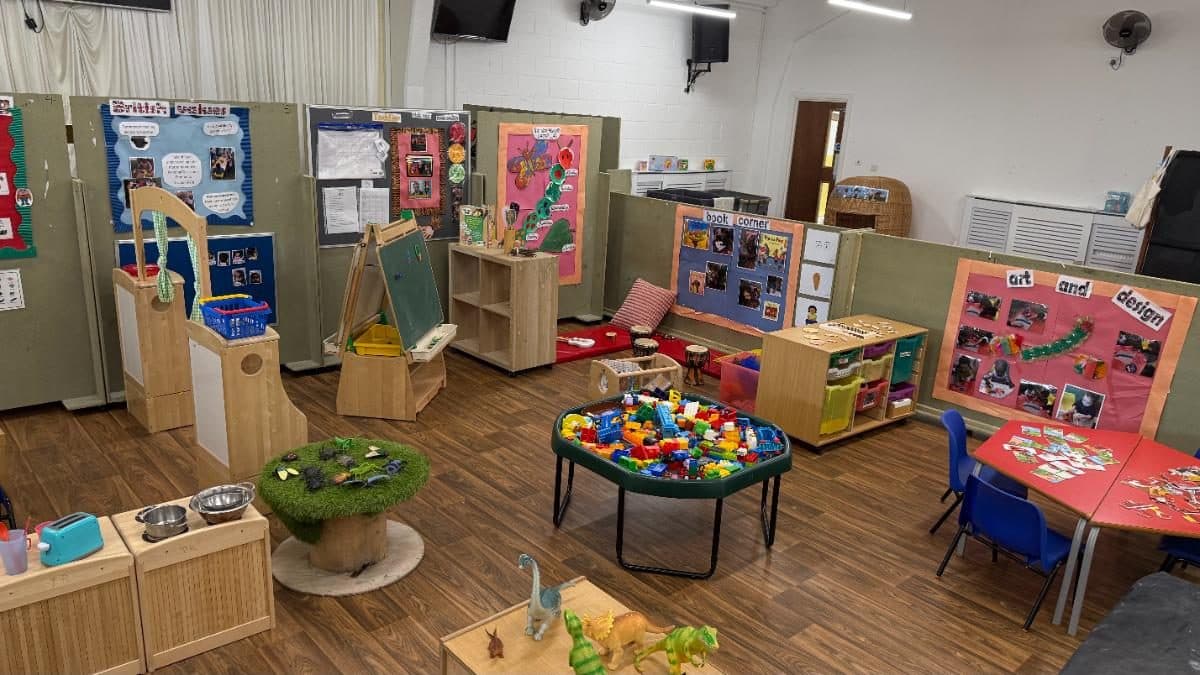
Play looks effortless. A child building a tower of blocks, pouring water between containers, chasing a friend across the garden. To the untrained eye it can seem like a break from learning. But in early years, play is the learning. It always has been, and every day at our nurseries in Haringey and Tottenham I see exactly why.
What children are actually doing when they play
When a child lines up small animals and gives each one a voice, they are building narrative thinking, practising language, and processing their own experiences. When two children negotiate who gets the red spade, they are navigating social dynamics, managing frustration, and finding compromise. None of this is incidental. It is some of the most complex cognitive and emotional work a young child will ever do.
We often observe quieter forms of play that are just as rich. A toddler who sits and fills and empties a cup of sand over and over is not being repetitive for the sake of it. They are testing cause and effect, developing concentration, and building the kind of focused attention that will serve them in every area of life.
The different types of play and why each matters
Not all play looks the same, and that is a good thing. At different ages and stages, children need different experiences.
- Sensory play (mud, water, paint, dough) builds fine motor skills and gives young children language for texture, temperature, and sensation.
- Imaginative and role play develops empathy, storytelling, and emotional literacy. We see children working through big feelings through role play in ways they cannot yet express in words.
- Physical play (running, climbing, balancing) is crucial for coordination, spatial awareness, and confidence in the body.
- Construction and building supports mathematical thinking, problem solving, and perseverance.
- Social play (games with rules, group activities) teaches children to take turns, communicate clearly, and manage winning and losing with grace.
Children do not need to be directed through these. Given the right environment, resources, and a trusted adult nearby, they move through them naturally.
The adult's role in play
One question parents often bring to us is how involved they should be. The honest answer is that it depends on the child and the moment. Sometimes the most valuable thing an adult can do is stay close and say very little, allowing a child to lead, problem-solve, and persist without interruption.
At other times, a well-placed question from a key person can extend thinking considerably. "What do you think would happen if..." or "I wonder why that fell over" invites a child to reflect, predict, and reason. These are not leading questions. They open space for a child's own ideas.
At Destiny Haven Nursery we build this into how our practitioners work. Our curriculum includes the LEEP programme and the EYFS statutory framework, both of which place child-led and play-based learning at the centre. We also use Wellcomm to support language and communication, because we know that talk and play are inseparable in early childhood.
Play and language development
Some of the biggest leaps in vocabulary I have witnessed at our nurseries have happened not during structured phonics sessions, but during play. A child describing what a dinosaur is doing. Children arguing over the storyline in a den they have built together. A small group working out why the ramp they made is not sending the car fast enough.
These moments are language-rich in a way that is hard to replicate artificially. The motivation is real, the context is meaningful, and the words stick.
Play matters all the way to age twelve
At Destiny Haven we work with children from three months right up to twelve years across our two North London sites, and the importance of play does not drop away as children grow. Older children need time for unstructured, imaginative, and social play just as much as younger ones. Our holiday club and after-school provision keeps this at the heart of what we offer, even as children move through primary school.
What this means for families in Haringey and Tottenham
Families across Haringey often tell us that they feel pressure to introduce formal learning as early as possible. I understand that instinct. Parents want their children to do well. But the evidence we see in our rooms every day points clearly in the other direction. Children who have had rich, varied, supported play experiences arrive at formal learning with stronger foundations, not weaker ones.
Play builds the skills that underpin everything else: curiosity, resilience, communication, and the ability to concentrate. There is no shortcut to those things, and there is no better vehicle for them than well-supported, joyful play.
If you would like to see how we approach play-based learning in person, we would love to show you around. You can book a show-around at either our Noel Park or Tottenham site and see our environment and approach for yourself. If you have questions about places, sessions, or funding, our fees and funding page is a good place to start.
Come and see us for yourself
Book a relaxed tour of Destiny Haven Nursery and meet our team.
Book a tourOther guides you might like
Child Development
Sleep and Development in the Early Years: What We See at Nursery
Sleep shapes so much of how young children grow, learn, and feel. Here, Susana shares what we observe day to day at Destiny Haven Nursery and what families often ask us about rest.
Child Development
Simple Ways to Support Your Child's Speech and Language at Home
From everyday conversation to bath-time routines, there is so much you can do at home to nurture your child's communication. Here are the approaches we share with families at Destiny Haven Nursery.
Child Development
Simple Ways to Support Your Child's Speech and Language Development at Home
Speech and language development happens in the small moments of everyday life. Here are some of the approaches we use at Destiny Haven Nursery, and how you can carry them on at home.
Frequently asked questions
How do you make sure children are actually learning through play, not just passing time?
Play is learning in early childhood. Our practitioners are trained to observe what each child is working on and to extend it through resources, questions, and gentle involvement. Every play experience links to areas of the EYFS framework, and we track each child's development carefully through their key person relationship.
At what age should children start more structured learning?
We introduce structure gradually and always alongside play. Phonics and more focused activities become part of the day as children approach school age, but we keep play central throughout. In our experience, children who have had rich early play tend to take to structured learning more readily, not less. The two genuinely support each other.
What curriculum does Destiny Haven Nursery follow?
We follow the EYFS framework and incorporate the LEEP programme, Wellcomm for language and communication, phonics, and creative play. Our approach is play-led and values-led, grounded in our Christian ethos. We also provide SEND support and work closely with parents throughout. You are welcome to book a show-around to see it in action.
Is funding available to help with childcare costs at Destiny Haven?
Yes. We accept 15 hours universal funded childcare for all 3 and 4 year olds, and 30 hours for eligible working families with children from 9 months old. Eligibility for 30 hours depends on parental working hours and income. Visit our fees and funding page or check your eligibility at childcarechoices.gov.uk.