
Child Development
Simple Ways to Support Your Child's Speech and Language Development at Home
Written by Susana, Owner & Manager at Destiny Haven Nursery
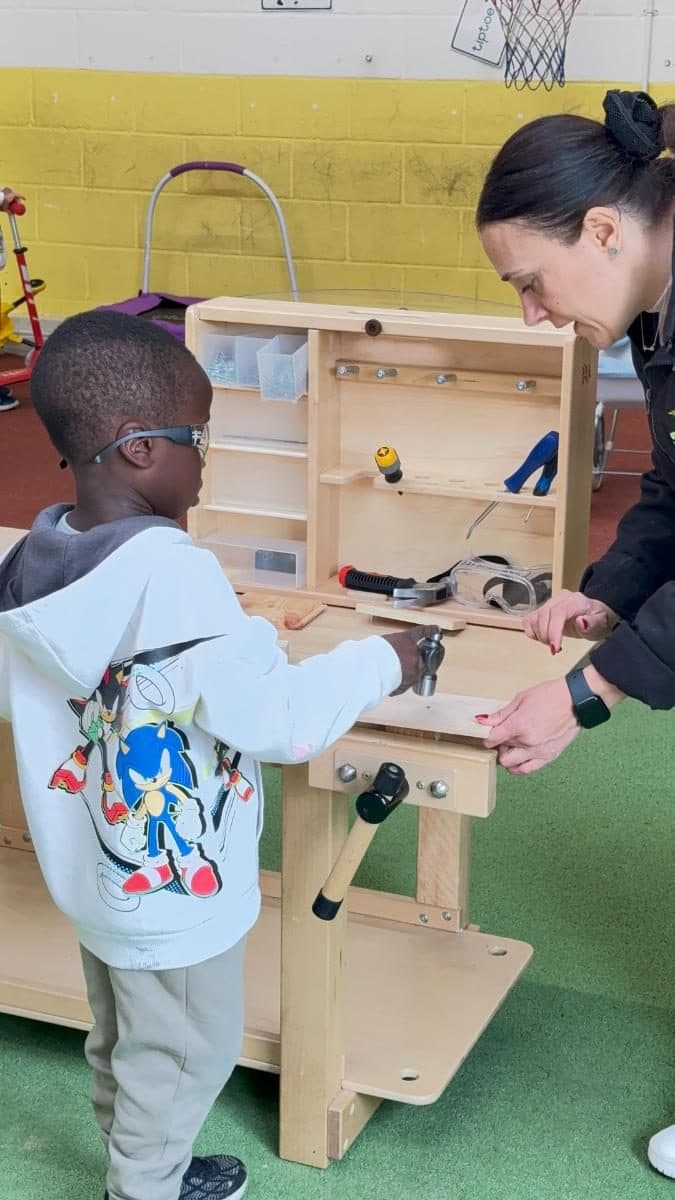
Speech and language development is something we think about every single day at Destiny Haven Nursery. From the moment a baby arrives in our baby room to the afternoon sessions in our pre-school, we are constantly looking for opportunities to build communication, not in a formal or pressured way, but through conversation, play, and genuine connection.
Parents often ask us what they can do at home to support their child's language growth. The honest answer is: quite a lot, and most of it fits naturally into your existing routine.
Talk through what you are doing
One of the simplest things you can do is narrate your day. When you are making breakfast, getting your child dressed, or walking to the park, describe what is happening. "I am pouring the milk now. Can you hear it?" or "Let's put your coat on. It's cold outside today."
This kind of running commentary gives children a constant stream of vocabulary in context. They are hearing words attached to real objects and actions, which is how language sticks. We do a lot of this in our nursery sessions, and it makes a real difference over time.
Read together, every day if you can
We find that children who are read to regularly tend to have a noticeably richer vocabulary by the time they reach our pre-school room. Books introduce words and sentence structures that don't often come up in everyday conversation, and they give children something to talk about.
You don't need to read every word on the page. Point at pictures, ask questions, make silly voices, let your child turn the pages and lead. The conversation around the book is often just as valuable as the story itself.
Libraries across Haringey offer free children's sessions and book loans, which is worth knowing if you want to keep things fresh without spending money on new books every week.
Ask open questions
It is very easy to ask questions that only need a yes or no answer. "Did you have fun?" is natural, but it closes things down quickly. Try swapping some of those for open questions: "What did you do at nursery today?" or "What was the best bit?" or "Who did you play with?"
Children don't always answer straight away, and that is completely normal. Giving them time to think, without rushing to fill the silence, is something we practise a lot in our nursery. It is worth trying at home too.
Sing, rhyme, and be a bit silly
Rhymes and songs are genuinely powerful for language development. The rhythm and repetition help children hear the patterns in language, and the playfulness makes it enjoyable rather than a chore. Nursery rhymes, action songs, made-up rhymes about your child's name, all of it counts.
We use music and movement throughout our sessions, and the children who arrive already knowing a handful of songs tend to join in quickly and confidently.
Respond to communication at every stage
For babies and very young children, communication starts long before words arrive. Babbling, pointing, facial expressions, and reaching are all early attempts to connect and communicate. Responding to these with warmth and attention, making eye contact, mirroring sounds, naming what they are pointing at, tells a child that they are being heard.
At our Noel Park and Tottenham settings, our key persons build close relationships with each child precisely so they can read these early signals and respond in ways that encourage more. You can do the same at home by slowing down and tuning in.
Limit background noise where you can
This one is easy to overlook. When the television is on in the background, or there is constant noise in the environment, it is harder for young children to process language. Even short periods of quieter time, during meals, during play, during a walk, give children more opportunity to hear speech clearly and to attempt it themselves.
When to seek support
Most children follow a broad pattern of language development, but there is a wide range of what is typical. If you have a concern about your child's speech or language, speak to your health visitor or GP. Early support makes a real difference, and there is no such thing as raising a concern too soon.
At Destiny Haven Nursery we follow the Wellcomm programme, a structured approach to supporting language and communication, and our team includes experience of SEND support for children who need a little more. If you ever have a question about your child's communication, we are always happy to talk it through with you.
For a clear picture of what children are expected to achieve at different ages, the EYFS statutory framework sets out the communication and language goals that all registered early years settings work towards.
If you would like to see how we bring language development to life day to day, we would love to welcome you. Book a show-around at our Noel Park or Tottenham setting and come and see us in action. We work with families across Haringey and the wider North London area, and we are always happy to chat about what your child needs.
Come and see us for yourself
Book a relaxed tour of Destiny Haven Nursery and meet our team.
Book a tourOther guides you might like
Child Development
What Is the EYFS Framework and What Does It Mean for Your Child?
The EYFS framework shapes how nurseries in England support children's learning and development from birth to age five. Here is what it actually means in practice, and how we use it at Destiny Haven.
Child Development
Why Routine Matters So Much for Toddlers (And How We Support It at Nursery)
A consistent daily routine gives toddlers the security they need to explore, learn, and thrive. Here's what we see every day at Destiny Haven Nursery, and why it makes such a difference.
Nutrition
Feeding Toddlers Well: What We See Working Day to Day at Nursery
Toddler nutrition can feel overwhelming, especially when little ones are going through fussy phases. Here we share what we observe and learn from feeding children every day at Destiny Haven Nursery.
Frequently asked questions
At what age should my child be putting words together?
Most children start combining two words, things like "more milk" or "daddy go", somewhere around 18 to 24 months. By age two, many will have around 50 or more words. There is a wide range of what is typical, though. If you have a concern at any age, it is always worth speaking to your health visitor rather than waiting.
Does screen time affect speech and language development?
We find that children develop language most readily through back-and-forth interaction with real people. Passive screen time does not provide that. Short, age-appropriate programmes watched together and talked about can be fine, but extended background screen time can reduce the quality of conversational time children get. Keeping meals and play as screen-free as you can makes a difference.
How does Destiny Haven Nursery support children's language development?
We use the Wellcomm programme across our nursery, which is a structured approach to supporting communication and language. This sits alongside our broader EYFS curriculum, phonics, and creative play. Each child also has a key person who gets to know them individually and supports their communication in a way that fits who they are. You are welcome to book a show-around to see this in practice.
Do you accept funded hours, and does that affect the support my child receives?
Yes, we accept both 15 and 30 hours government funding. The 15 hours universal entitlement is available for all three and four year olds regardless of your circumstances. The 30 hours is available for eligible working families, including, since September 2025, families with children from 9 months old. Every child receives the same attentive care regardless of how their place is funded. See our fees and funding page for more detail.