

Child Development
What Mixed-Age Learning Really Looks Like (And Why It Works)
Written by Susana, Owner & Manager at Destiny Haven Nursery
There's a moment I find myself noticing again and again at our nurseries. A three-year-old is struggling to put on their coat, and before a member of staff has even moved, one of the older children has crouched down beside them and started helping. Nobody asked them to. They just did it.
That's mixed-age learning in action, and it tells you something no observation checklist quite captures.
What we mean by mixed-age groupings
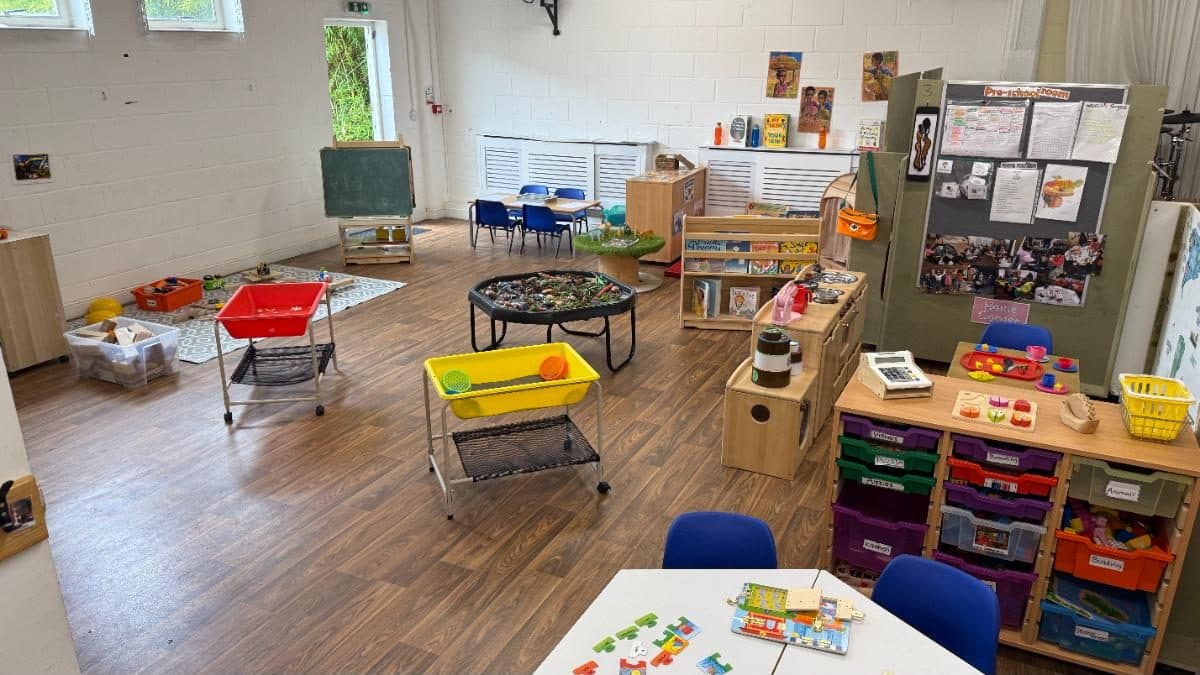
At Destiny Haven Nursery, our children range from three months to five years old across our two North London sites in Noel Park and Tottenham. Within our rooms and sessions, children often spend time together across different ages and stages, rather than being kept in strictly separated year groups.
This isn't simply a matter of logistics. It's something we've come to value genuinely, because of what we see it doing for children day after day.
Older children grow through teaching
When an older child explains something to a younger one, something interesting happens. They have to slow down, find the words, and actually think about what they know. We see this during creative play, during phonics activities, during mealtimes. The four-year-old who helps a two-year-old choose a colour is consolidating their own knowledge in a way that sitting with peers the same age simply doesn't replicate.
This is one of the reasons our LEEP programme works so well within a mixed-age context. It's built around open-ended, experiential learning, and that kind of learning scales naturally. A younger child engages at their level; an older child goes deeper.
Younger children stretch further
Children are remarkably good at learning from whoever is just slightly ahead of them. Watching an older child write their name, build a tall structure, or manage a conflict calmly gives younger children a model that feels genuinely achievable, rather than impossibly distant.
Parents often ask us whether younger children get lost or overlooked in mixed-age settings. In our experience, the opposite tends to happen. Younger children are often more motivated in mixed-age groups. They want to keep up. They try things earlier than they might otherwise.
Language and communication develop naturally
Our Wellcomm programme focuses specifically on language and communication, and mixed-age groupings give it a rich environment to work within. Children naturally adjust the way they speak depending on who they're talking to. An older child explaining something to a younger one is using more sophisticated language. A younger child asking a question of an older peer is practising communication in a low-pressure, natural way.
We hear more conversation, more negotiation, and more storytelling in mixed-age groups than we do in same-age settings. Language thrives when it has a genuine purpose.
Social and emotional learning
The EYFS statutory framework places personal, social, and emotional development at the heart of early years practice, and mixed-age groupings support this in ways that are difficult to manufacture.
Children learn patience when they're waiting for a younger child to catch up. They learn empathy when they see a smaller child find something frightening or confusing. They learn resilience when they're the youngest in a group, still finding their feet. These are not lessons delivered in a session. They're lived, repeatedly, in the ordinary flow of the day.
For families across Haringey, this kind of social learning matters especially. Children here grow up in diverse, interconnected communities. Learning to be with people at different stages of life is genuinely useful preparation.
What this looks like day to day
Some of what we notice in practice:
- Older children taking real pride in being helpful, often taking on a gentle leadership role without being asked
- Younger children attempting physical challenges, mark-making, or independent tasks earlier than might be expected
- Quieter children finding it easier to engage with a mixed group, because the dynamic is less uniformly pressured
- Children naturally forming bonds across ages, which can also ease transitions within the nursery
Our key person approach supports all of this. Each child has a named key person who knows them well, tracks their progress, and communicates closely with their family. In a mixed-age environment, that individual relationship is what keeps every child seen and supported.
A word on readiness
Not every moment of every day is mixed-age, and that's intentional too. Children also need time with peers at a similar stage. What we aim for is a balance: opportunities for mixed-age connection woven into the day, alongside focused activities that meet each child at their own level.
For children approaching school age, this balance is particularly valuable. By the time they leave us, they've practised helping others, being helped, leading, following, and navigating a group where not everyone is the same. That's good preparation for school, and for life beyond it.
If you'd like to see how this works in practice, we'd love to show you around. You're welcome to book a show-around at either our Noel Park or Tottenham site, and see the environment for yourself. We're always happy to talk through how we support individual children, and if you have questions about fees and funding, including government-funded hours, our team can walk you through what's available.
Come and see us for yourself
Book a relaxed tour of Destiny Haven Nursery and meet our team.
Book a tourOther guides you might like
Child Development
Why Play Is the Most Serious Thing We Do at Nursery
Play is not a break from learning. It is how children learn. Here is what we see every day at Destiny Haven Nursery, and why it matters more than most people realise.
Child Development
Why Play Is the Most Important Work Your Child Does
Play is far more than fun. It is how young children learn to think, communicate, relate to others, and make sense of the world around them. Here is what we see every day at Destiny Haven Nursery.
Child Development
Sleep and Development in the Early Years: What We See at Nursery
Sleep shapes so much of how young children grow, learn, and feel. Here, Susana shares what we observe day to day at Destiny Haven Nursery and what families often ask us about rest.
Frequently asked questions
Don't younger children get overwhelmed when they're learning alongside older ones?
It's a fair concern, and one we keep a close eye on. In practice, we find younger children tend to be energised rather than overwhelmed. Mixed-age settings work best when adults know each child well, which is why our key person approach is central to everything we do. Every child is known individually.
How does mixed-age learning support children with additional needs?
We offer SEND support as part of our curriculum, and mixed-age groupings can be genuinely helpful for children with additional needs. Peer modelling, natural repetition, and the varied pace of a mixed group all create opportunities. We tailor our approach for each child and work closely with families throughout.
What ages do you take at Destiny Haven Nursery, and do you have space at both sites?
We welcome children from three months to five years old at both our Noel Park site in N8 and our Tottenham site in N17. The best way to find out about current availability is to book a show-around and speak with us directly. We're happy to talk through what sessions might suit your family.
Can I use government funding towards my child's place?
Yes. We accept both 15 and 30 hours government-funded places. The universal 15 hours is available to all three and four year olds. The 30 hours is available to eligible working families, including, since September 2025, families with children from nine months old. Visit our fees and funding page or check your eligibility at childcarechoices.gov.uk.